5 Leadership Lessons from FDR that Inspire Reinvention During Times of Change
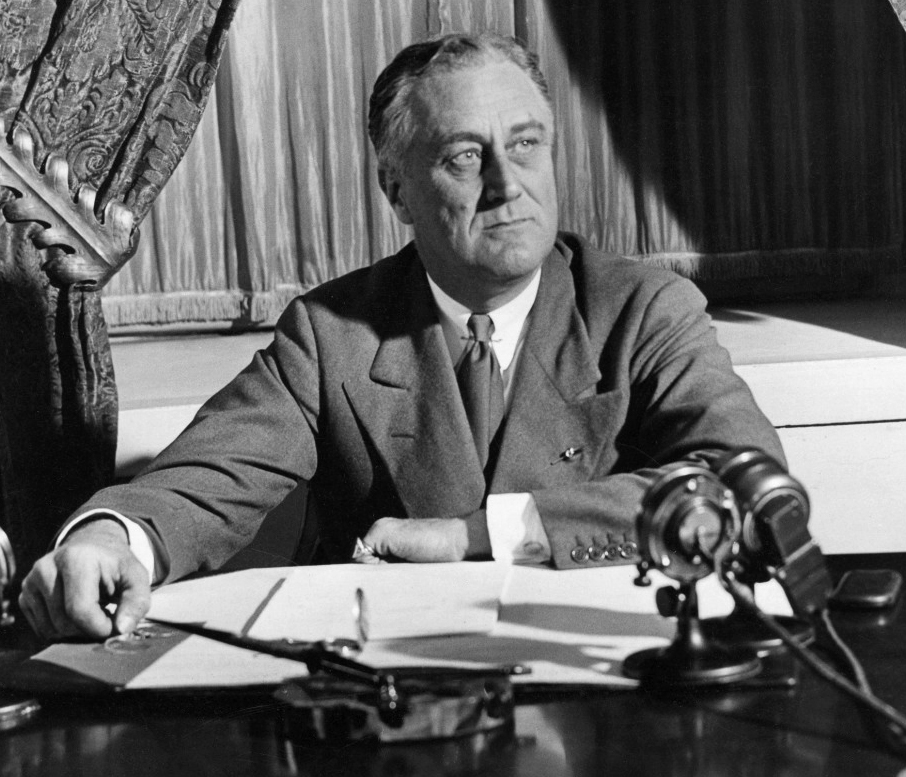

The country needs — and, unless I mistake its temper — the country demands bold, persistent experimentation. It is common sense to take a method and try it: If it fails, admit it frankly and try another. But above all, try something.
— U.S. President Franklin D. Roosevel
When the U.S. stock market crashed on October 29, 1929, shock waves collapsed markets worldwide. Three years later, 15 million Americans were out of work — one out of every three people. Capital investment dropped from $10 billion in 1929 to $1 billion in 1932. Farm income plummeted 60 percent. Worldwide gross domestic product (GDP) fell by 15 percent.
The following spring, Franklin Delano Roosevelt (FDR) was sworn in as the 32nd president of the United States. He took urgent and bold action to save America from ruin. “The country needs — and, unless I mistake its temper — the country demands bold, persistent experimentation,” he told the American people. “It is common sense to take a method and try it: If it fails, admit it frankly and try another. But above all, try something.”
More than 90 years later, the lessons of FDR’s leadership are still relevant for business leaders — especially those leading a company through difficult times. These five leadership lessons from FDR’s presidential campaign, early days in office and tenure as president have stood the test of time.
Leadership Lesson 1: Provide an Inspiring Vision that Gets People Excited
During his run for office, FDR campaigned on a “New Deal” for America. While he was short on specifics, his energy, charisma and message of hope resonated. “Happy Days Are Here Again” played at all FDR events. Campaign Manager Jim Farley observed that Roosevelt’s “ability to discuss political issues in short, simple sentences made a powerful impression. There was a touch of destiny about the man.”
Americans thought so too, and elected FDR in a landslide.
Leadership Lesson 2: Lead with Optimism, No Matter How Dire the Situation May Be
The day before FDR’s inauguration, banks in 32 of the country’s 48 states had closed. Deposits evaporated. Money was useless anyway — there was nothing to buy.
On Saturday, March 4, 1933, gloomy skies matched the nation’s mood at FDR’s inauguration. Yet he radiated optimism. In his address, FDR proclaimed he would speak with “candor,” lead with “vigor,” and act “boldly.” He assured Americans of his “firm belief that the only thing we have to fear is fear itself.” As he spoke, sunshine emerged.
Leadership Lesson 3: Work Collaboratively with Your Colleagues to Develop a Plan for Change
While thousands attended the inaugural celebrations, FDR invited his cabinet to the White House, where Justice Benjamin Cardozo swore them in as a group — a first. Roosevelt had assembled his team in February, a bipartisan mix of conservatives and liberals, including the first female Secretary of Labor. FDR joked that the Saturday swearing-in meant they would “receive an extra day’s pay.” It signaled that his presidency would begin with action rather than ceremony.
That night, FDR stayed up past 1 a.m. with longtime aide Louis Howe, discussing the plan that would become known as the “Hundred Days,” a bold experiment in governing that set the bar for new leaders. Henceforth, the first hundred days for executives in all types of institutions would become the symbolic benchmark for measuring their early successes.
Leadership Lesson 4: Take Bold Action and Demonstrate Courage
FDR’s approach was informed by three elder statesmen: Antioch College professor Arthur Morgan inspired FDR to think big. Harvard President A. Lawrence Lowell encouraged FDR to take and hold the initiative with Congress. Retired Supreme Court Justice Oliver Wendell Holmes told FDR, “You are in a war, Mr. President, and in a war there is only one rule, ‘Form your battalion and fight!’”
On Sunday, March 5, 1933, FDR met with congressional leaders to solicit their support, and then issued a proclamation closing the country’s banks. The next day he met with U.S. governors to explain his decision. He received a standing ovation.
On that Thursday, Congress convened for a 100-day special session. In just seven hours, legislation safeguarding banks and depositors was introduced, passed and signed. FDR’s first days in office set the tone for his presidency and were characterized by speed, confidence and a willingness to try new things. “There are many ways of going forward,” he noted, “but only one way of standing still.”
Leadership Lesson 5: Make Decisions that Benefit the Greater Good
During the Hundred Days, FDR introduced—and Congress established—dozens of agencies that stimulated farm programs, initiated conservation programs, outlawed child labor, and raised wages. Timing helped. With war looming, American industry awoke — providing new jobs and what Roosevelt called the “great arsenal of democracy.”
FDR created opportunities to put Americans back to work and to feel good about themselves. Though crippled by polio and unable to walk since age 39, FDR exhibited the courage, vision and willpower to get America back on its feet.
To Lead Better, Ask More of Yourself
Taking inspiration from FDR’s legacy, reflect on these questions as you think about your leadership approach.
- What’s your inspiring vision for your organization? How can you give your employees something to cheer for?
- What bold action will you develop and lead to breathe new life into your company?
- What will be your most significant leadership accomplishments during the next 12 months?
- List the actions you will take to improve your business during your next “Hundred Days.”
- How will you prepare for economic changes on the horizon?
- If a bold move is necessary, are you ready to make it?
This article is an edited excerpt from How Leaders Decide: A Timeless Guide to Making Tough Choices, the No. 1 new historical reference book on Amazon.

Category : Leadership
About the Author: Greg Bustin
Greg Bustin is a 15-year Vistage Master Chair with two Chief Executive groups, a Key Executive group and an Emerging Leader group in Dallas. He is also a Vistage speaker and has delivered more than 500 keynotes and workshops on five conti
…